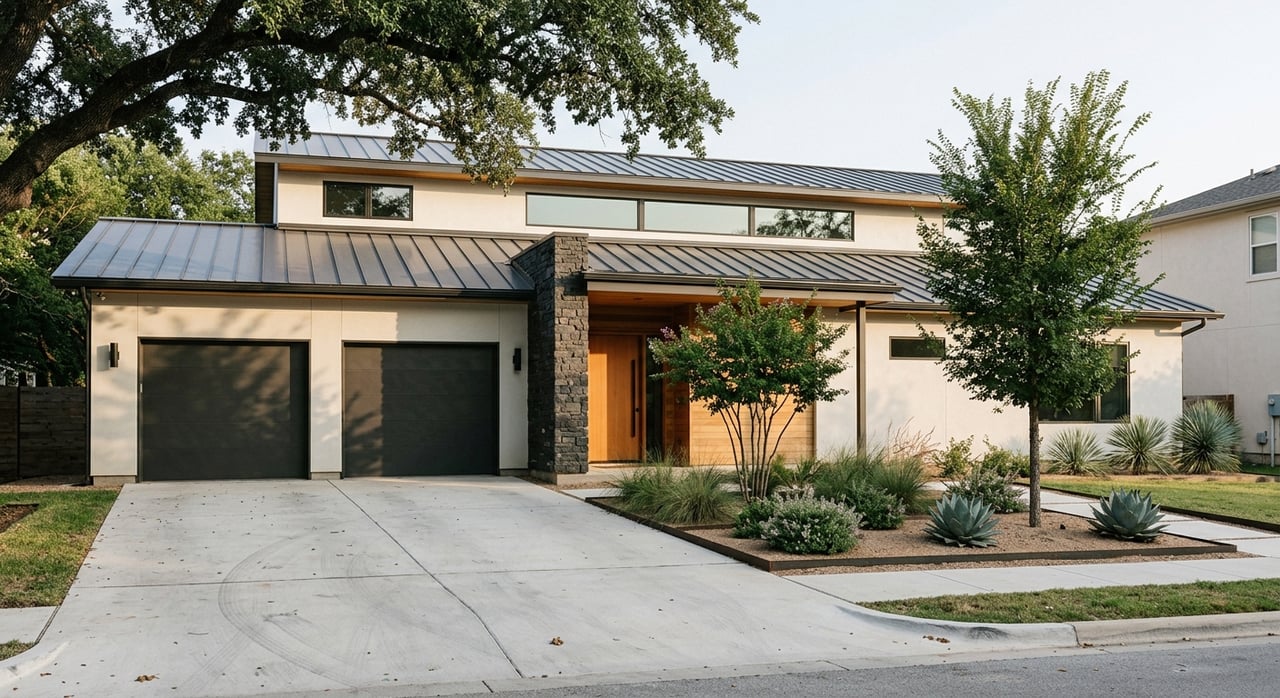
Relocating To Round Rock: Neighborhoods, Schools, Commute
May 7, 2026
May 7, 2026
Thinking about a move to Round Rock? You are not alone. For many buyers relocating to the Austin area, Round Rock stands out because it offers suburban space, major nearby employers, established community infrastructure, and pricing that can look more approachable than Austin overall. If you are weighing neighborhoods, schools, and what daily commuting will really feel like, this guide will help you sort through the tradeoffs and move forward with more clarity. Let’s dive in.
Round Rock sits about 15 miles north of Austin and had an April 2026 population estimate of 142,530. That gives you a city with real scale, not just a small suburb attached to a larger metro. It also means you will find a broader mix of housing, parks, services, and commuting patterns than many buyers expect at first glance.
The city highlights Dell, Amazon, UPS, Kalahari, and several healthcare employers as major economic anchors. For you as a buyer, that can translate into shorter job-to-home options, more flexibility if your household works in different parts of the metro, and a relocation decision that is tied to real employment centers instead of a single downtown commute.
Round Rock also says its combined property-tax and utility burden is among the lowest in the region. That does not replace a home-specific cost review, but it does help explain why Round Rock stays on the shortlist for buyers who want to balance monthly cost, convenience, and space.
A helpful way to think about Round Rock is by lifestyle and location pattern. The city’s official neighborhood map includes areas such as downtown/Old Town and Town Center, Round Rock West, La Frontera, Chisholm Valley, Brushy Creek, Cat Hollow, Behrens Ranch, Teravista, Forest Creek, Paloma Lake, Siena, and Sonoma.
While those are official named areas, many relocating buyers find it easier to narrow choices into three practical groups: downtown and I-35-adjacent areas, older central and west neighborhoods, and newer north and east subdivisions. That is not an official city classification, but it is a useful way to compare how you want to live.
Downtown Round Rock is anchored by a historic district and sits less than half a mile from I-35. The city has also spent years reinforcing mixed-use, walkable downtown redevelopment, which makes this part of Round Rock especially relevant if you want easier freeway access and a more urban feel.
If you expect to drive into Austin regularly, being closer to I-35 can simplify your routine. You may also prefer these areas if you want to be nearer local dining, events, and the character that often comes with a historic core.
Areas such as Round Rock West, Chisholm Valley, Brushy Creek, Cat Hollow, and Behrens Ranch often appeal to buyers who want established surroundings and a more mature neighborhood feel. For many relocators, these areas offer a middle ground between access, community infrastructure, and day-to-day livability.
If your priorities include parks, existing tree cover, and a neighborhood that feels settled rather than newly built, these parts of Round Rock may deserve a closer look. The right fit will still depend on the specific home, your commute, and your school-boundary needs.
Neighborhoods such as Teravista, Forest Creek, Paloma Lake, Siena, and Sonoma often come up for buyers who want newer housing patterns, planned-community amenities, or more inventory in growth areas. These neighborhoods can be attractive if you want contemporary layouts, larger community footprints, and access to newer neighborhood infrastructure.
For some buyers, the tradeoff is a longer drive to certain job centers or favorite Austin destinations. For others, the added space and suburban amenities make that trade worthwhile.
Round Rock has more than 30 developed parks across 2,270 acres and over 20 miles of built hike-and-bike trails. That is a meaningful part of the lifestyle equation if you want easy access to outdoor time without needing to head into central Austin for recreation.
When you compare neighborhoods, it helps to think beyond the house itself. If regular park use, trails, and everyday outdoor access matter to your routine, that can shape which part of Round Rock feels best for you.
For many relocating households, schools are one of the biggest decision points. Round Rock ISD says it serves Round Rock and parts of Williamson and Travis County, with 35 elementary schools, 11 middle schools, seven high schools, and three alternative learning centers.
The district also highlights dual language, advanced academics, career and technical education, Pre-K, and college, career, and military readiness programs. That range matters because it gives families multiple program types to explore instead of assuming every campus offers the same experience.
Round Rock ISD said the Texas Education Agency released 2023-24 and 2024-25 district and campus ratings showing an 87/B for both years. The district also said 72% of campuses earned an A or B, while a smaller number earned Ds or Fs.
The practical takeaway is simple: the district shows a generally strong profile, but results are not identical across every campus. If schools are central to your move, you will want to evaluate the specific attendance zone tied to any home you consider.
This is one of the most important relocation steps. Round Rock ISD maintains school boundary maps, and the city’s new-resident guide reminds readers that district boundaries are separate from city limits and postal addresses.
In other words, a Round Rock mailing address does not automatically mean one specific district or one expected campus path. Before you make an offer, confirm the current attendance zone for that exact property.
If your search stretches across nearby suburbs, Pflugerville ISD is often part of the conversation. PfISD says it serves over 25,000 students on 35 campuses, including 22 elementary schools, seven middle schools, four high schools, and two alternative schools.
Its boundary-map page also warns that attendance-zone changes can happen as growth continues. In a 2025 district update, PfISD said half of campuses earned an A or B and 14 of 34 campuses improved year over year.
For you, that means Pflugerville may be worth considering if value is a top priority, but school research should stay property-specific there as well.
Round Rock is about 15 miles north of Austin, and its downtown is less than half a mile from I-35. That makes regional access one of the city’s strongest practical advantages, especially if your job, airport trips, or regular errands pull you south.
At the same time, Round Rock is still primarily car-oriented. Redfin transportation data shows a Walk Score of 26 and a Bike Score of 35, which supports the idea that most daily life here works best if you drive.
Round Rock partners with CapMetro for fixed-route service, hourly service to Tech Ridge Park & Ride, and a commuter express between the Round Rock Transit Center and downtown Austin. The city lists Route 50, Route 152, Route 980, and Round Rock Rides as current mobility options.
That does not make Round Rock a transit-first environment, but it does give some commuters and local riders real alternatives. If you work downtown or want a backup to driving, these services are worth reviewing as part of your home search.
If you are deciding between Round Rock and North Austin, price alone may not settle it. In March 2026, Round Rock’s median sale price was $367,500, while North Austin’s broad neighborhood page showed a median sale price of $368,000.
That is essentially the same on paper. The more useful distinction is how you want your days to function.
North Austin is more walkable and transit-friendly, with a Walk Score of 54, a Transit Score of 45, and a Bike Score of 61. If you want suburban space, parks, and proximity to major employers in a more car-oriented setup, Round Rock may fit better. If you want more central mobility and a more urban commute pattern, North Austin may feel easier.
If you are relocating and comparing multiple areas, this quick framework can help.
| Area | Median Sale Price (March 2026) | Key Takeaway |
|---|---|---|
| Round Rock | $367,500 | Strong option for suburban amenities, nearby employers, and established infrastructure |
| Pflugerville | $355,000 | Slight value alternative with fast-growth district dynamics |
| North Austin | $368,000 | Similar pricing to Round Rock, with more central and mobility-oriented living |
Austin overall was higher, with a March 2026 median sale price of $530,000. That is one reason Round Rock continues to attract buyers who want access to the metro without paying Austin-wide pricing.
The best relocation decision usually comes down to your daily rhythm. A neighborhood that looks great online may not feel right if the commute, school boundary, or home style does not support how you actually live.
As you narrow your options, focus on these questions:
If you answer those clearly, your search usually becomes much easier. Instead of trying to evaluate every listing, you can focus on the parts of Round Rock that best align with your goals.
Round Rock works well for many buyers because it offers a practical mix of suburban space, major employers, community amenities, and pricing that remains below Austin overall. It is not the best fit for every lifestyle, especially if walkability and transit are at the top of your list, but it can be a very strong option if you want room to spread out and a well-connected base north of Austin.
If you are planning a move, the smartest next step is to compare neighborhoods through the lens of your actual routine, not just broad city averages. School boundaries, commute style, and the feel of each area can change your experience more than headline price alone.
If you want thoughtful guidance on relocating to Round Rock or comparing it with nearby Austin-area options, connect with Justyn LeFebvre for a tailored, high-touch approach to your move.
Stay up to date on the latest real estate trends.
Etiam non quam lacus suspendisse faucibus interdum. Orci ac auctor augue mauris augue neque. Bibendum at varius vel pharetra. Viverra orci sagittis eu volutpat.
Get In Touch With Me To Learn More
@ Properties Lone Star- Christie's International Real Estate 1105 N. Lamar Blvd. Suite 105 Austin, TX 78703