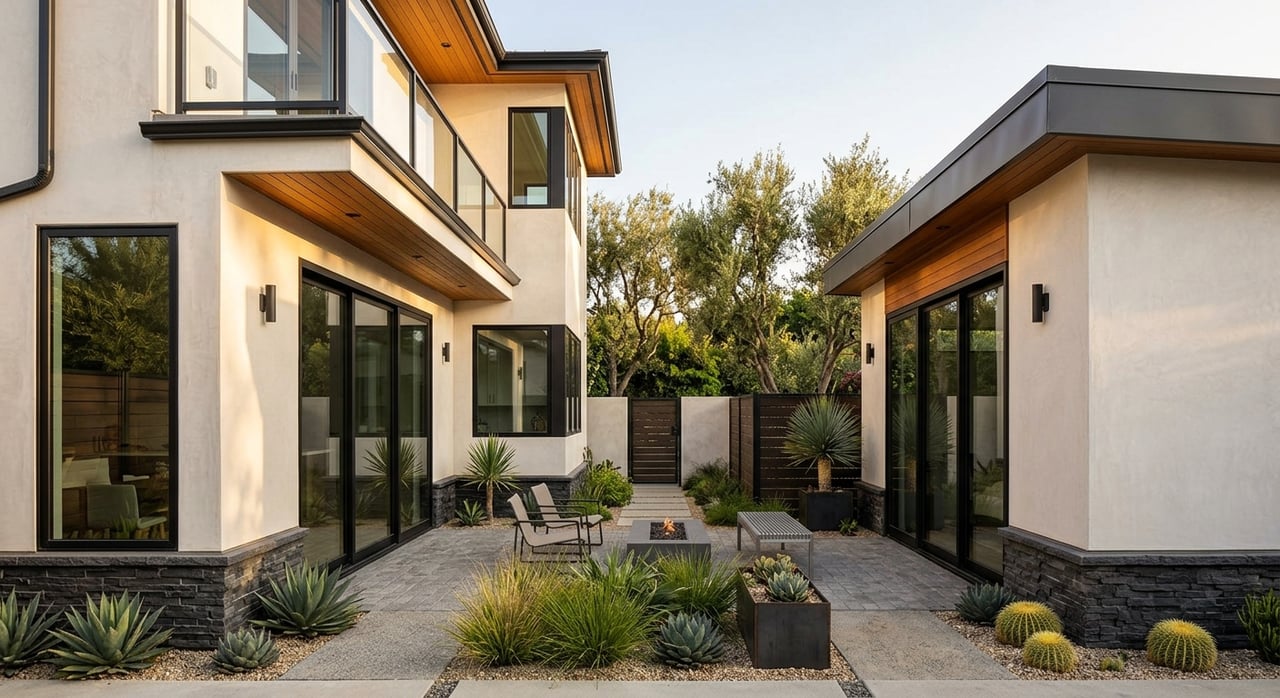
How East Austin ADUs And Infill Appeal To Investors
April 16, 2026
April 16, 2026
If you are looking at East Austin through an investor lens, 78702 stands out for a simple reason: it offers a rare mix of strong rental demand, flexible small-scale housing paths, and a built environment where added units can create real value. In a market where land is not cheap, the opportunity often comes from using a site more efficiently, not from finding a bargain lot. This guide will show you why ADUs and infill continue to attract attention in 78702, what Austin currently allows, and what you should study before you buy. Let’s dive in.
ZIP code 78702 covers about 5 square miles and has 25,985 residents, according to Census Reporter’s 78702 profile. The same source shows 14,986 housing units, a median household income of $102,171, and a median owner-occupied home value of $686,800. That pricing backdrop helps explain why investors often focus on adding usable housing rather than waiting for low land costs.
The housing mix also supports small-scale infill logic. ZIP code data for 78702 shows 59.1% of occupied units are renter-occupied, with a median gross rent of $2,041. It also shows a split between single-family units at 51.76% and multifamily units at 46.77%, which points to a market comfortable with more than one housing format.
For investors, that matters because flexibility supports multiple exit paths. A property may work as a long-term rental, an owner-occupant setup with rental income, or a future resale to a buyer who values an added unit. In a high-value urban ZIP, that optionality can be part of the appeal.
An ADU can be attractive in 78702 because it creates an extra housing unit on a site that already has residential use. In practical terms, that can mean additional rental income, more efficient land use, or a more compelling resale story. In a market where demand remains strong and rents remain elevated, the added unit can improve how a property performs over time.
Austin’s broader policy direction also supports this trend. The Austin Strategic Housing Blueprint says home prices have risen by 58% since the mid-2010s, rents remain high, and the city is actively developing zoning tools to support missing-middle and urban mixed-use housing. For investors, that is a meaningful tailwind for well-located ADU and infill projects.
Demand indicators inside 78702 are also notable. ZIP-level data shows 8,132 renter-occupied units and a median gross rent of $2,041, while Census Reporter shows 28.1% of residents moved in the previous year. That does not serve as a vacancy study, but it does suggest meaningful turnover and continued lease-up potential.
If you are evaluating ADUs in 78702, you need to separate older assumptions from current city rules. Austin still has a traditional ADU framework, but newer HOME amendments have expanded what some properties may support. That means your first conclusion should never be based on hearsay or outdated zoning chatter.
The City of Austin says traditional ADU rules require SF-1, SF-2, or SF-3 zoning, a minimum lot area of 5,750 square feet, a unique address or building number, and compliance with fire separation and other technical code requirements. The city’s ADU page also outlines the path through permit submission, activation, inspections, and final Certificate of Occupancy.
That framework still matters for many sites. If you are looking at a classic backyard cottage or detached secondary unit, these baseline requirements are a key part of your early feasibility check. The permit process and code details can directly affect budget and timeline.
Austin’s HOME amendments page explains that HOME Phase 1 allows up to three housing units, including tiny homes, on SF-zoned property. It also removed the old primary-versus-secondary use distinction. For investors, that is important because some sites may support multiple units even if they do not fit the older mental model of one house plus one ADU.
This shift changes how many buyers underwrite East Austin lots. Instead of asking only, “Can I add an ADU?” the better question may be, “What is the highest compliant unit count and layout this site can support?” That is a more useful starting point in a changing code environment.
HOME Phase 2 added another layer of opportunity. The city says it created a small-lot single-family residential use for lots from 1,800 to under 5,750 square feet, plus a separate infill subdivision path for qualifying sites, as outlined on the HOME amendments page.
The city also notes that for lots created before June 16, 2025, no drainage review is required when building no more than four units, while newer infill lots may need grading-plan compliance. For investors, this is a reminder that lot history can affect cost, timing, and complexity just as much as lot size.
East Austin investors should also pay attention to preservation rules. In 2025, the city updated its preservation bonus code amendment, allowing two new housing units when an existing housing unit is preserved, with a maximum of 0.65 FAR or 4,350 square feet. That is up from 0.55 FAR or 3,200 square feet, with no increase to impervious cover.
This matters in 78702 because preservation is part of the area’s land-use reality, not a side note. If an older structure contributes to a site’s strategy, preserving it may create a different development path than a full teardown.
Not every East Austin property should be viewed as a blank slate. The city’s East Austin Historic Survey reflects the area’s preservation-sensitive character, and the city says potential historic districts in East Austin make up less than 1% of Austin’s land area but contain more than 7% of local arts and cultural assets.
For an investor, the takeaway is straightforward: site context matters. Older buildings, preservation review, and cultural-resource considerations can affect what is practical, what gets approved, and what timeline you should expect. In 78702, design and entitlement strategy often need to work together.
Most East Austin investors are not just buying on zoning potential. They are buying on a combination of current demand, future flexibility, and realistic exit options. In 78702, the renter-heavy mix and current rent levels help support that thesis.
Long-term rental is usually the most durable path. The city’s ADU guidance states that an ADU built after October 1, 2015 may not be used as a short-term rental for more than 30 days in a calendar year, and a Certificate of Occupancy is required for a short-term rental license application. The city also says it will begin requesting removal of unlicensed properties from STR platforms on July 1, 2026, according to its ADU regulations page.
Because of that, many investors in 78702 focus on three practical outcomes:
That does not mean every site pencils. It means your underwriting should be built around durable demand and compliant use, not an aggressive short-term rental assumption.
In 78702, underwriting needs to be disciplined. With a median owner-occupied value of $686,800 in the ZIP, many deals will only make sense if the finished property creates more utility, more flexibility, or stronger income than the original site offered. The upside is usually in better use of the land, not cheap basis.
A helpful way to structure your review is to underwrite on three layers:
You should also stress-test your assumptions. The city’s housing blueprint notes that rents remain high, but affordability pressure and price sensitivity still matter, so conservative lease-up and vacancy assumptions are wise. It is better to be pleasantly surprised than to rely on best-case rent growth.
Timeline risk deserves special attention. On the city’s ADU development page, Austin states that permit review times and fees vary by property and scope, construction cannot begin until permits are activated, and an active permit expires on the 181st day if no inspection occurs. Each inspection extends the permit by 180 days, which means delays can directly affect carrying costs.
Before you buy a 78702 property for ADU or infill potential, you should confirm what the site can legally and practically support. Austin specifically warns that deed restrictions and restrictive covenants can change what a property can do. That is why early due diligence is not optional.
The city’s Property Profile tool overview is one of the first places to start. It can help you verify zoning, overlays, and other site-specific factors before you commit capital.
Here is a simple due diligence checklist for East Austin infill:
One more detail can also help at the margin. Austin’s Street Impact Fee program information says some ADU projects on already-developed sites do not require a Street Impact Fee because an ADU does not generate at least 10 PM peak-hour trips. That may modestly improve project economics, depending on the site.
78702 continues to attract investor interest because it combines urban demand, renter depth, evolving housing rules, and multiple ways to create value on a small scale. It is not a simple market, and it is certainly not a low-effort market. But for buyers who do the homework, ADUs and infill can offer a thoughtful path to income, flexibility, and future resale appeal.
In a neighborhood context as layered as East Austin, success often comes from choosing the right lot, understanding the rules, and aligning design with what the site can actually support. If you want a strategic read on a 78702 property, lot potential, or resale positioning, connect with Justyn LeFebvre for a polished, data-informed approach to Austin infill opportunities.
Stay up to date on the latest real estate trends.

Etiam non quam lacus suspendisse faucibus interdum. Orci ac auctor augue mauris augue neque. Bibendum at varius vel pharetra. Viverra orci sagittis eu volutpat.
Get In Touch With Me To Learn More
@ Properties Lone Star- Christie's International Real Estate 1105 N. Lamar Blvd. Suite 105 Austin, TX 78703